
Enterprise IDP
Maersk Internal
Developer Platform
The Maersk Internal Developer Platform (IDP) was an ambitious project comprising a suite of applications that form a cohesive and powerful set of tools.
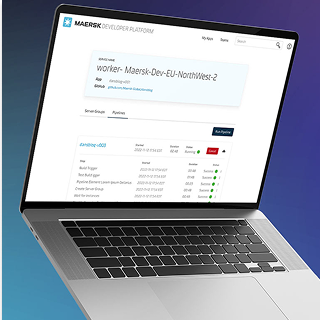
Enterprise IDP
The Maersk Internal Developer Platform (IDP) was an ambitious project comprising a suite of applications that form a cohesive and powerful set of tools.
Customer Profile
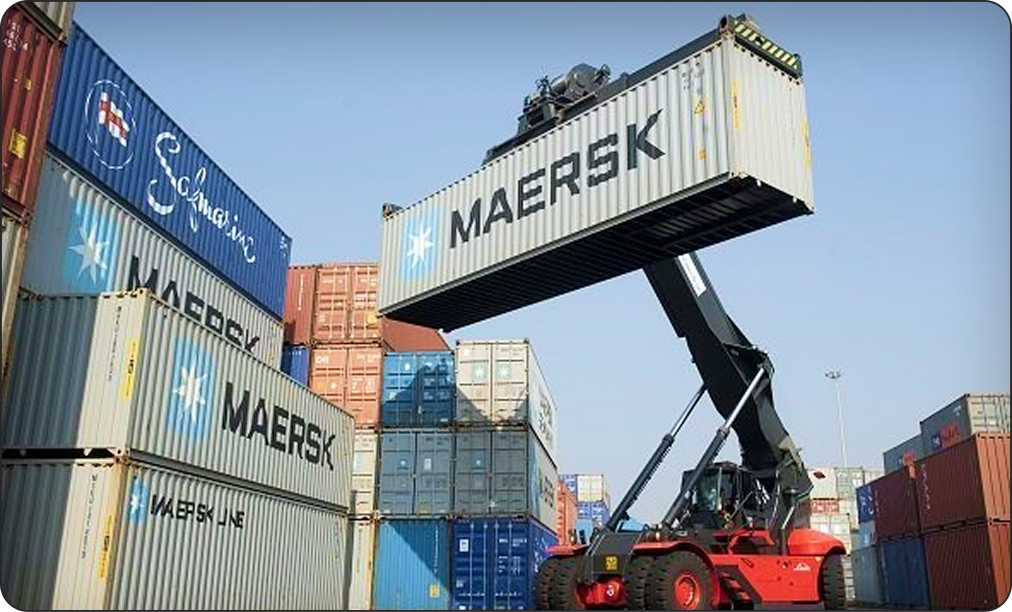
Maersk, founded in 1904, operates one of the world’s largest shipping and logistics networks, providing container transportation, logistics, and port operations. The company moves goods globally through its fleet of container vessels and delivers end-to-end supply chain solutions for industries such as retail, automotive, and energy.
The Challenge
Its extensive network and infrastructure enable it to facilitate the movement of goods worldwide. However, running at this massive scale, can be difficult to focus on relevant feature development instead of waiting for an operational team to provision infrastructure or respond to tickets.
Another issue the teams faced was limited observability of infrastructures, applications, services, reliability, and more to help operations teams identify the issues.
User-Research
We conducted user interviews to capture real user needs, behaviors, and expectations. By combining early-morning collaboration, shared tools, and strong documentation, the team stayed aligned across time zones and progressed toward key milestones.
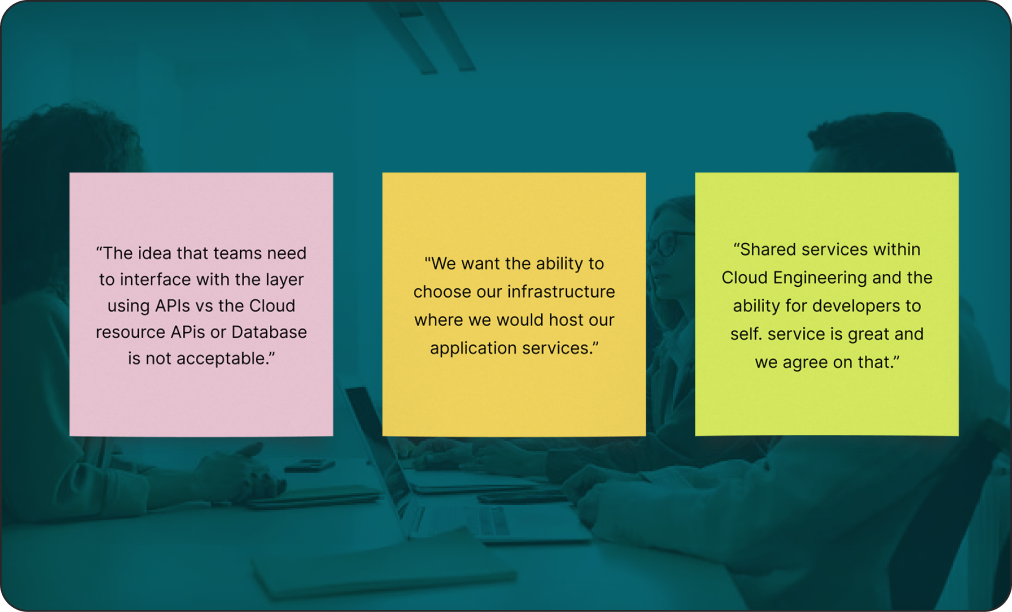
Statements gathered during the user-interiews held.
Market Opportunities
Providing a centralized and self-service environment reduces the complexity and overhead of infrastructure management, empowers developers to focus on writing code and delivering business value, and enables faster application development and deployment cycles.
A powerful observability system can monitor apps, services, lead times, and alerts. Resulting in a significant gain in productivity.
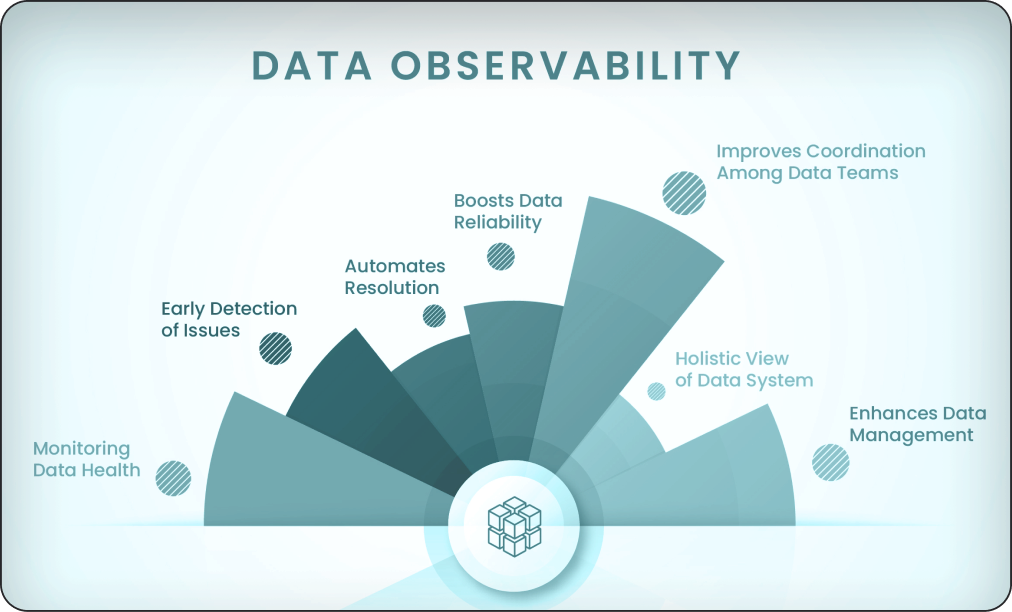
Image from https://www.acceldata.io/why-data-observability
Further Research
Next I created a journey map to make the developer experience visible and measurable. The journey map follows an application developer from initial awareness through deployment, helping the team identify friction, gaps, and opportunities across five critical phases: awareness, research, GitHub, coding, and deployment.
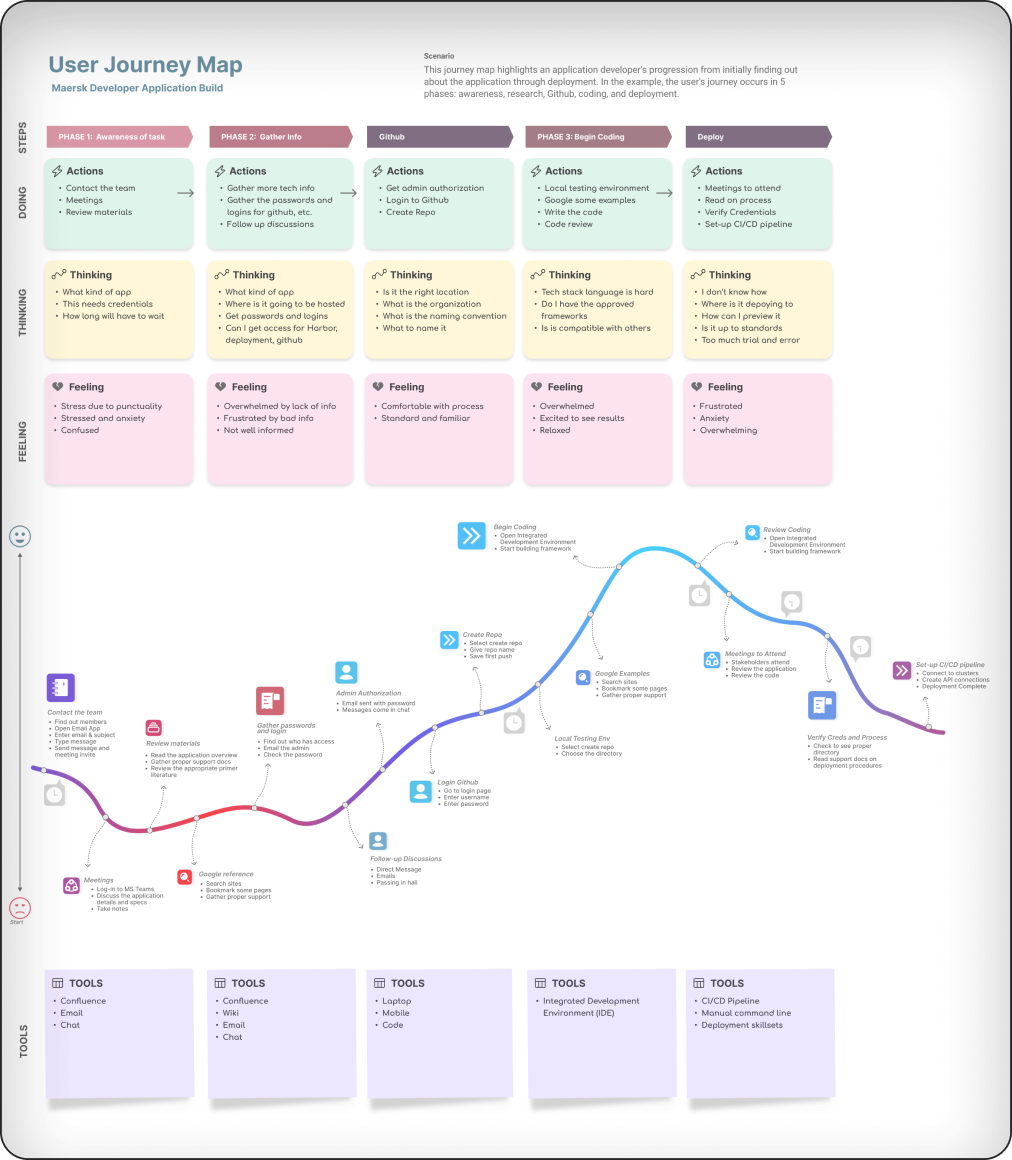
Journey Map of the Developer Process of “Spinning-up and Environment.”
Competitive Analysis
Sleuth allows the user to see what has been released into each environment, show how much more frequently we were releasing in the new system compared to the old one, and change lead time metrics. They show various data display methods, including tables, line charts, and scatter plots.
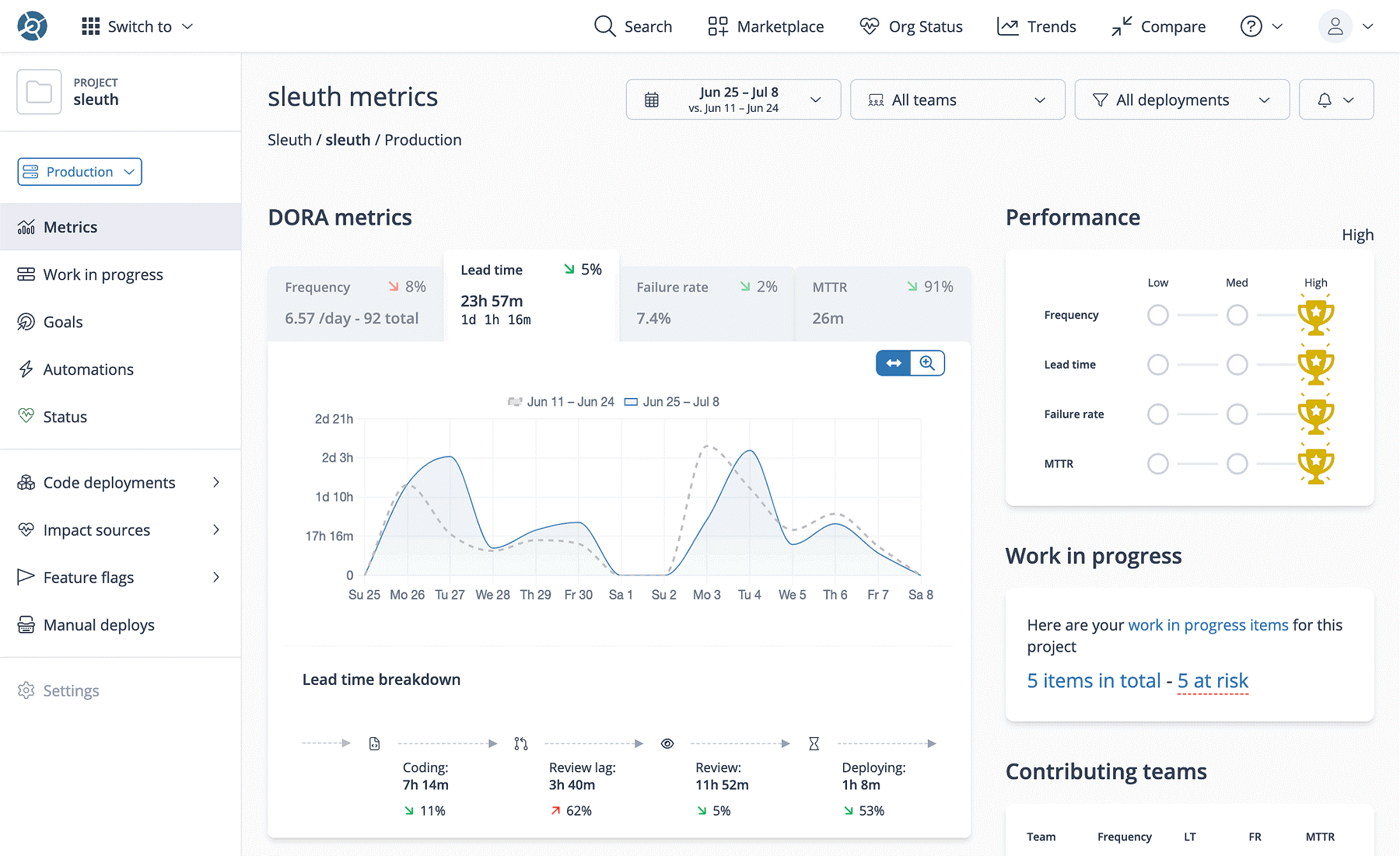
The Slueth user interface showing some tabs that were liked.
Linear B is focused on insights and drives business success by mastering project prioritization and achieving essential objectives. With the ability to visualize your resource allocation across multiple projects, you can manage your resources, ensuring optimal utilization.
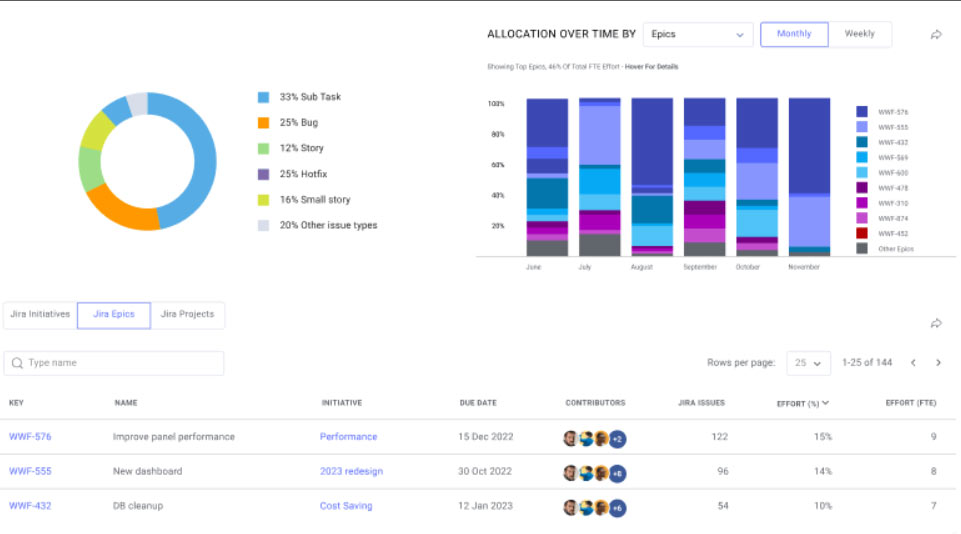
The Linear B app solution dashboards.
Design Phase
Low-fidelity wireframes established structure, hierarchy, and user flow, aligned stakeholders early, and reduced downstream rework.
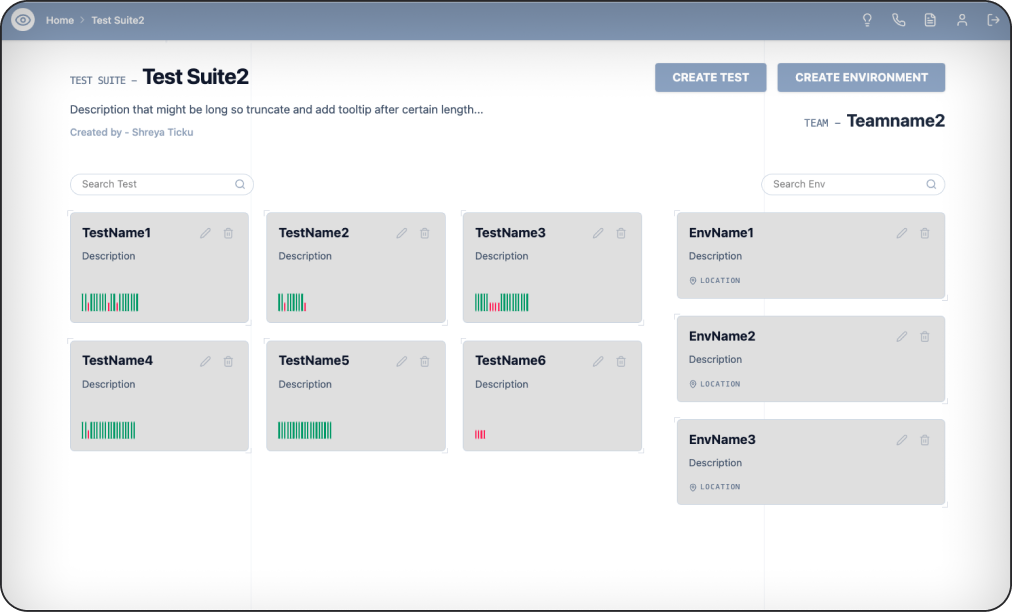
Wireframe Drawing of the customer suite dashboard.
Interactive prototypes enabled early usability testing and rapid iteration, helping validate decisions and uncover issues before development.
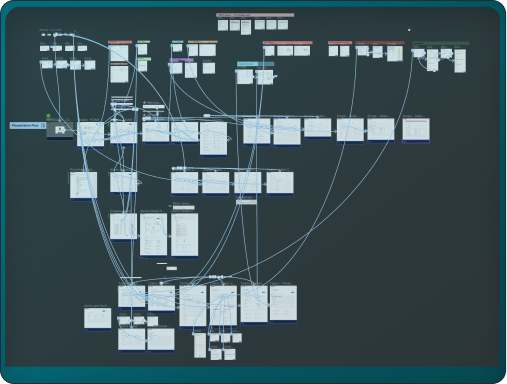
Interactive prototype created using Figma
The Design Phase
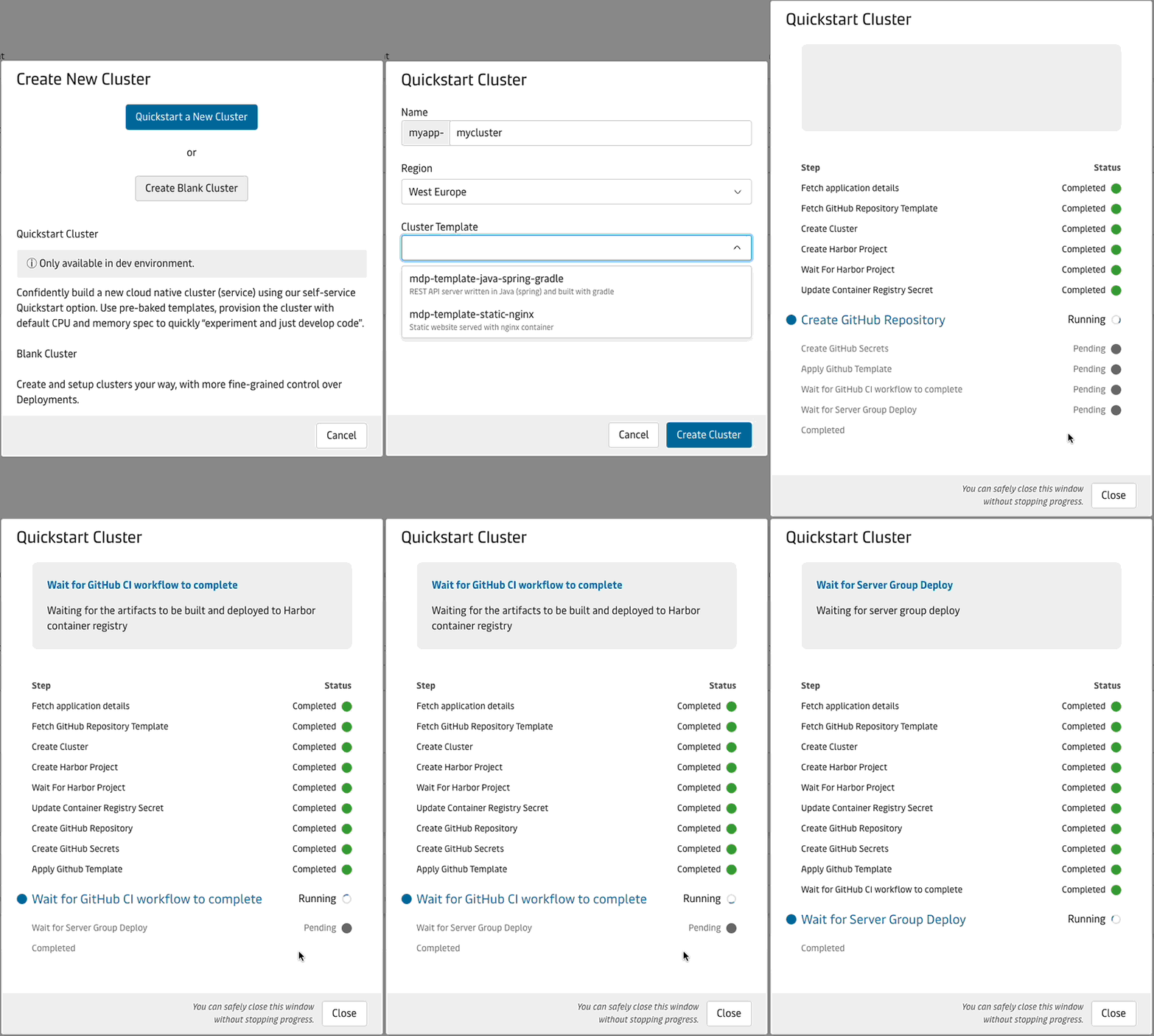
The Quickstart flow allowed the user to input the name, region, and template to base the cluster on.
After the details are added, a list of the steps and status of the process is displayed. The step’s name and description are displayed at the top to keep the user continually informed of the status.
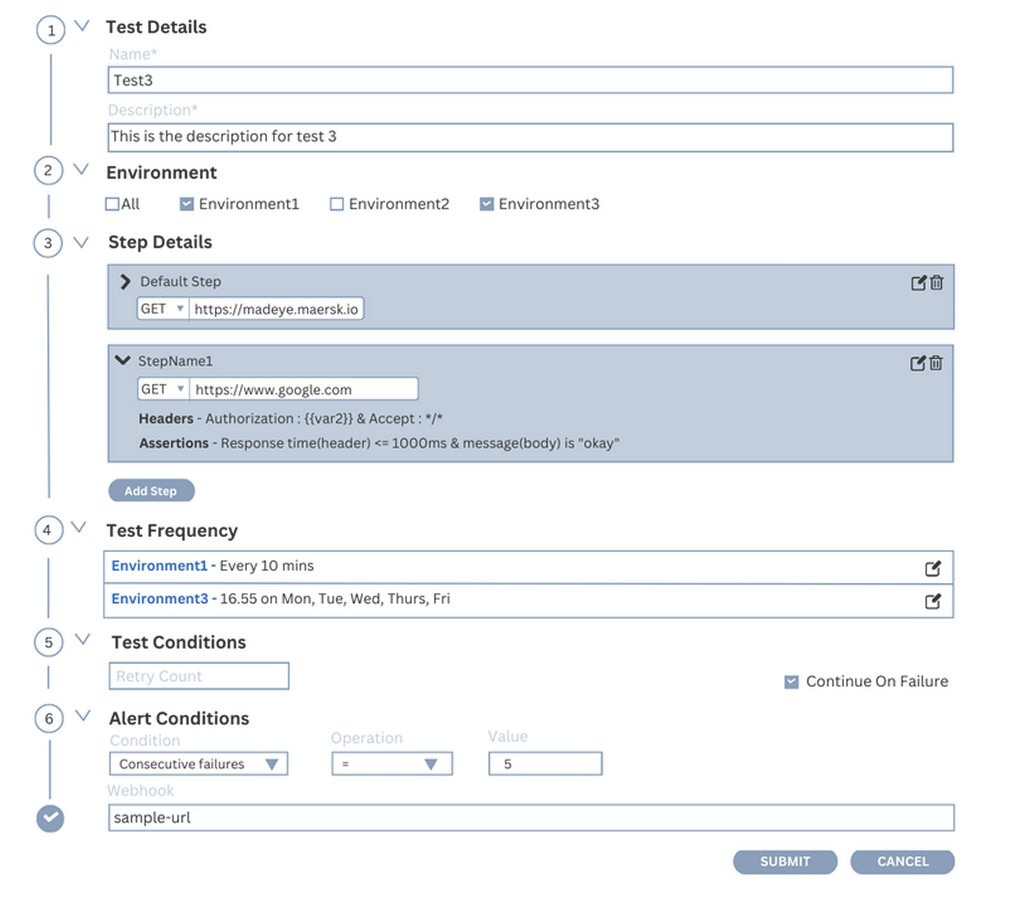
The Create New Cluster Modal displaying the Quickstart Process.
The Quickstart flow allowed the user to input the name, region, and template to base the cluster on.
The Design Phase
I was given the Maersk Design System (MDS) assets in Figma, including many elements, such as notifications, icons, typography, buttons, and other essential components. This system offers a complete guide on handling instances of these elements effectively.
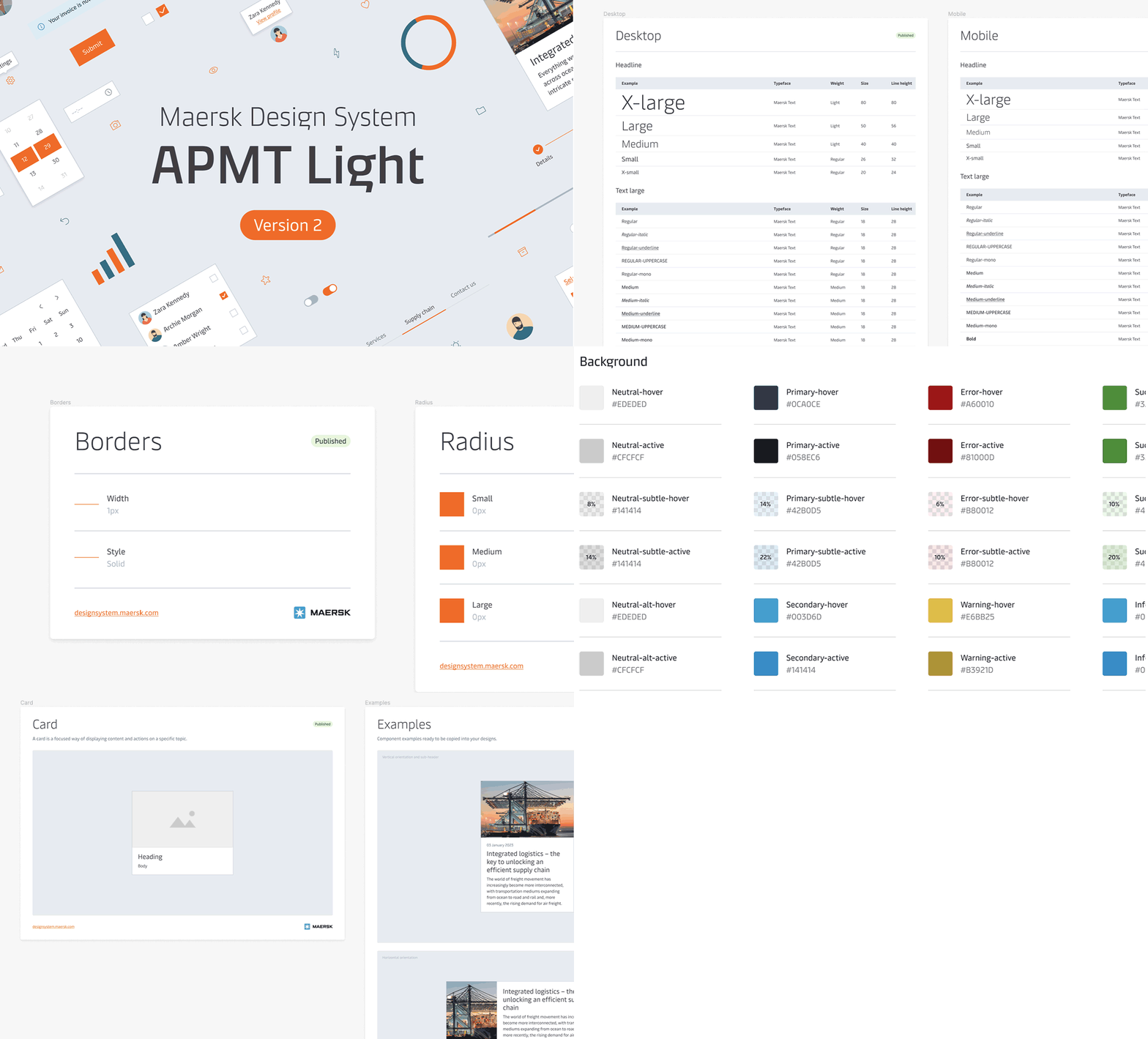
The Maersk Design System APMT Light v2
The Design Phase
The Maersk Developer Platform (MDP) serves as the central hub for developers to “spin up” all of the needed components to create new applications and services within the Maersk enterprise. Each app was designed to address development teams’ specific needs and challenges, providing them with essential tools and capabilities.
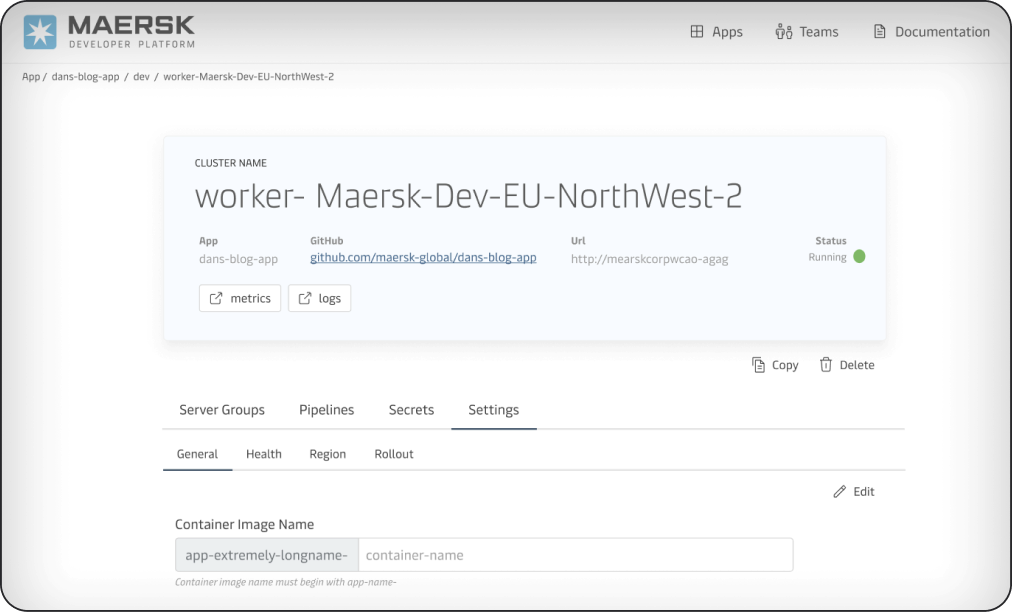
The developers “cluster” general settings control panel.
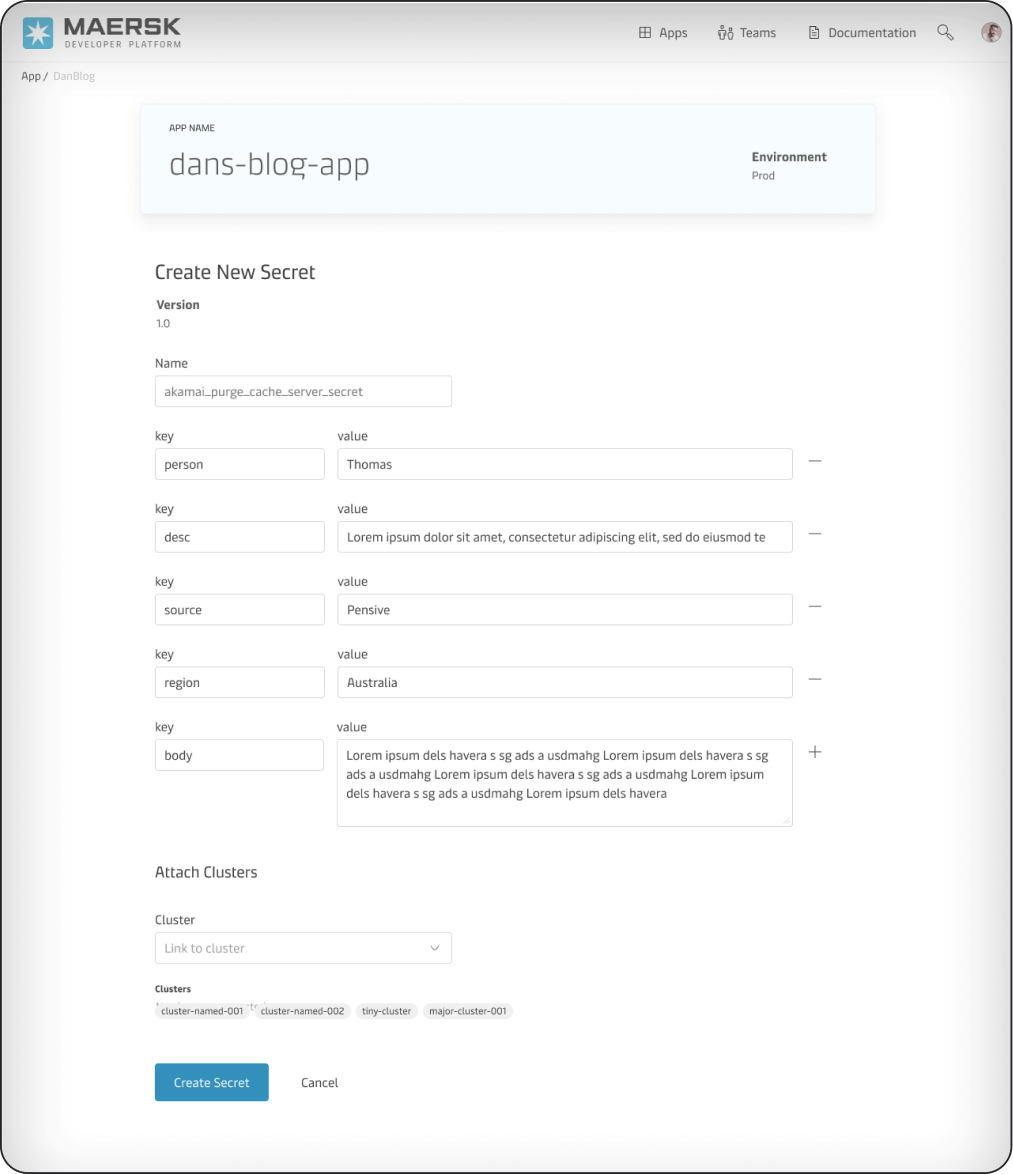
The ‘Create New Cluster’ Modal displaying the Quickstart Process.
Summary
The Maersk Internal Developer Platform reinforced the importance of designing for scale, alignment, and long-term governance. Beyond improving developer workflows, the project highlighted how thoughtful UX strategy, cross-continental collaboration, and design system discipline can unify complex enterprise ecosystems and drive meaningful organizational change.