Enterprise Healthcare

Drug Software Audit & Design System


A heuristic audit evolved into a scalable portal framework aligned to the Design Language System (DLS), establishing consistent layouts, standardized modal behavior, and validated responsive patterns for upcoming web portals.

Client

Baxter

Duration

9 months

Industry

Healthcare

Discover

Immersion & Context Framing

Dose IQ started for me as a focused heuristic evaluation—not a redesign. The portal was already in production and heavily used by hospital pharmacists, but customers were reporting ongoing difficulty with core tasks like creating drugs, editing drug details, and understanding which entries had custom concentration changes.

I approached the work as a diagnostic effort first. Before proposing solutions, I needed a full picture of how the system behaved across pages, workflows, and patterns that had grown organically over time.

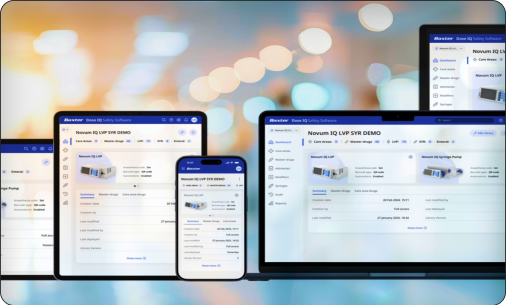
Final concepts shown in a variety of responsive display sizes.

Audit & Heuristic Evaluation

A structured review of pages, page-types, and workflows

I completed a comprehensive audit of the portal to map what existed: page types, repeated structures, and task flows. From there, I applied a Nielsen Norman-style heuristic evaluation to identify where usability breakdowns were occurring and why.

The findings consistently pointed to problems that were structural rather than cosmetic—unclear hierarchy, inconsistent interaction models, and poor visibility into system state (especially around drug libraries, concentration changes, and edit behavior).

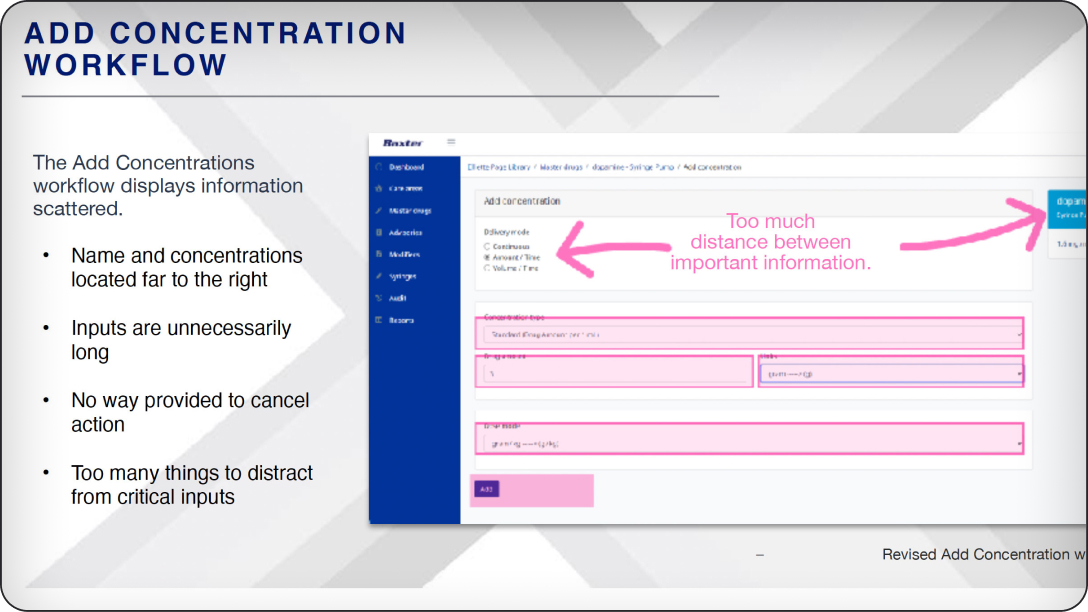
Add concentration workflow heuristics

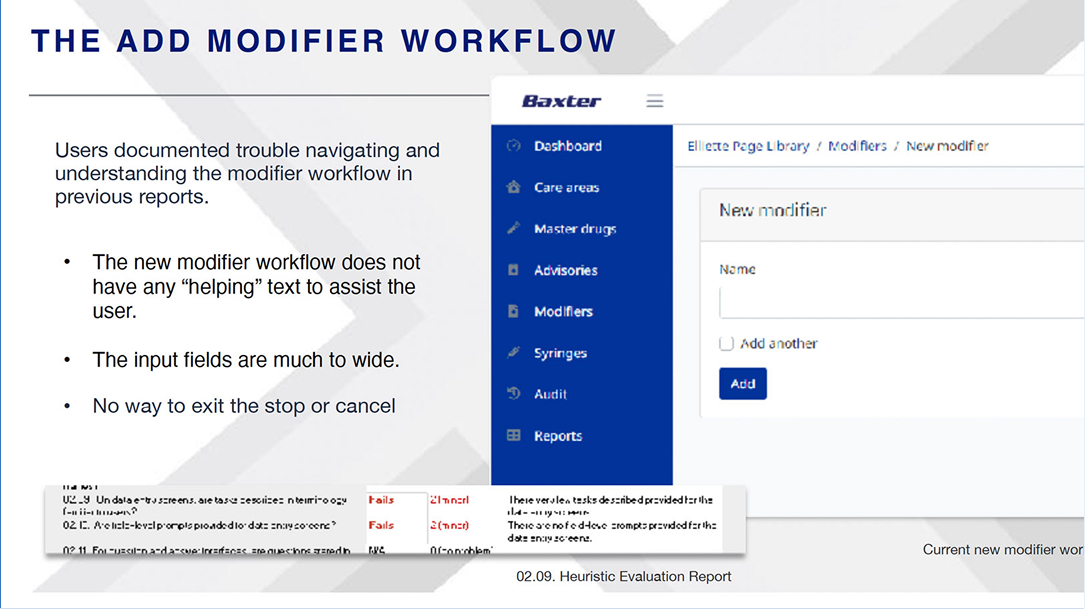
The “Add Modifier” workflow revealed numerous areas for improvement.

This work culminated in a full heuristic evaluation document, which became the foundation for decision-making and prioritization.

The “Add Concentration” workflow revealed similar issues.

Problem Definition

Shifting the Conversation to Risk Reduction

The key insight wasn’t that Dose IQ needed a new look—it was that users couldn’t confidently complete high-stakes configuration tasks. The friction was highest where the system required precision and clarity: drug creation/editing, identifying customized concentrations, and navigating long hierarchical lists.

Opportunity

A Moment of Opportunity

A targeted set of UX interventions that improve clarity and task success without triggering a major overhaul or regulatory ripple effects.

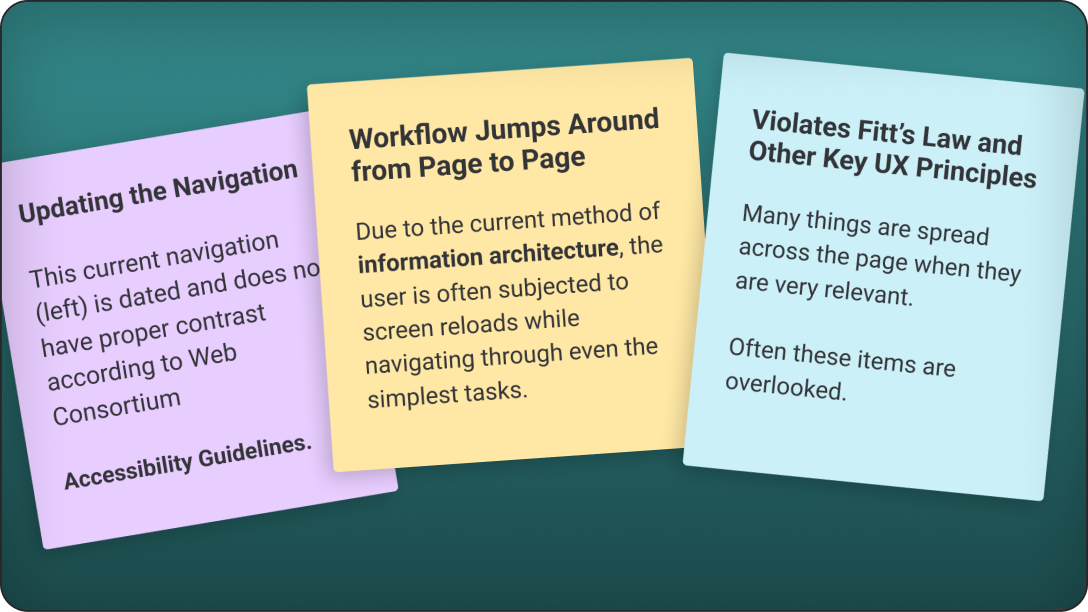
Repeatedly violated Fitt’s Law as well as navigation best practices.

Concept Design

Usability improvements that respected FDA timing and scope

Once I completed the evaluation, I proposed early concepts to address the most critical usability issues. These were intentionally restrained: structural improvements, clearer hierarchy, and better state visibility—rather than a visual redesign.

Because the product was not scheduled for a new 510(k) submission at that time, we weren’t aiming for sweeping UI changes. The goal was to make meaningful improvements where we could, while remaining realistic about what could ship safely and responsibly.

This phase produced preliminary concepts that positioned the team for the next step: aligning Dose IQ improvements with broader enterprise design system direction.

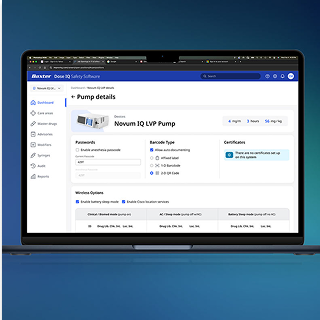
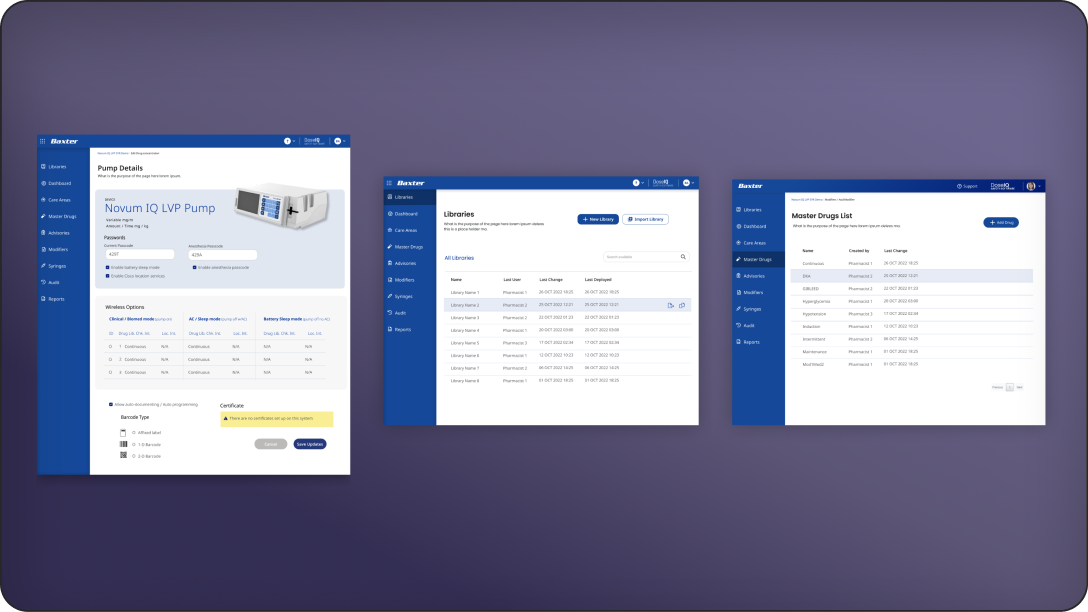
Original concepts I created in Figma for DoseIQ

Some of the first concept that were created to help usability concerns.

Design Systemization & Alignment

Aligning with Agency to bring Dose IQ to Baxter’s Design Language System

Baxter partnered with world the renown design agency, Frog to define a Design Language System (DLS) to harmonize patterns across multiple enterprise applications, including web portals.

My role was to lead Dose IQ’s heuristic-driven needs to emerging DLS standards through cross-functional workshops (including in-person sessions in Batesville, Indiana to align Dose IQ with system-level patterns.

The kick-off meeting was held in Batesville, Indiana, to do a discovery deep-dive

Structural Redesign

Design Sprint Goals

Standardizing the library experience

Drug libraries weren’t just another navigation item—they were the governing state of the entire portal.

DashBoard & Page Layout

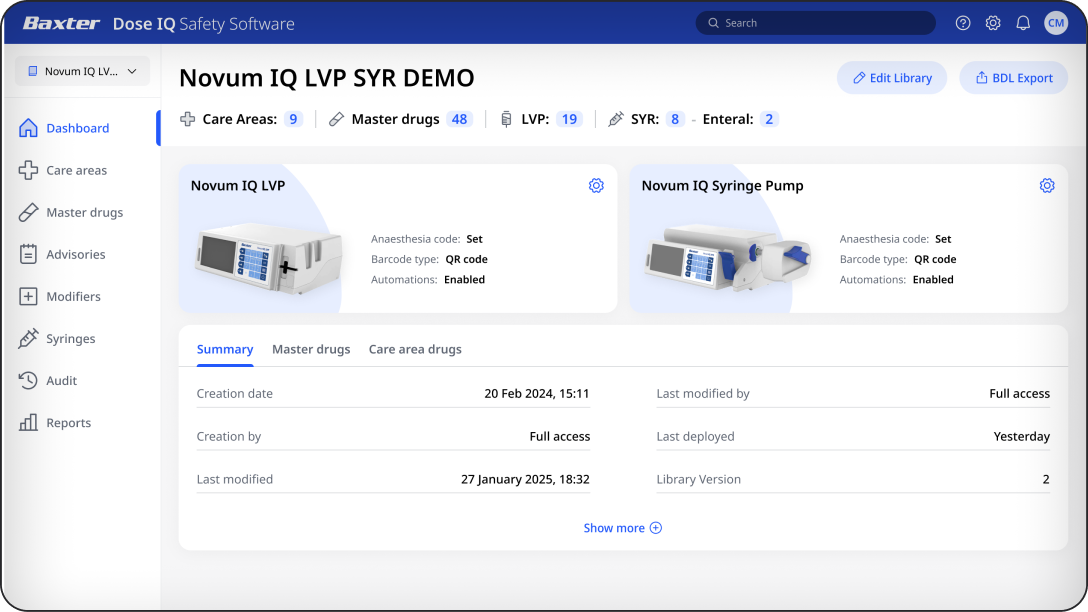
Defining the dashboard and the main pages layout (primary and secondary) to be consistent with other Baxter Products.

Final concept of the Dashboard

Dashboard final concept view.

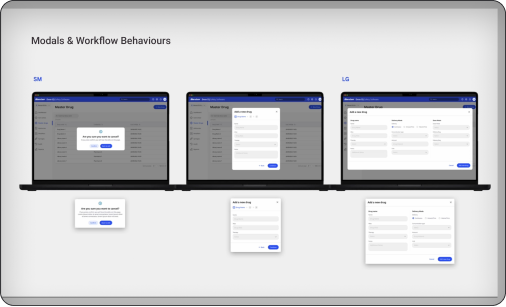
Modal & Workflows Behaviours
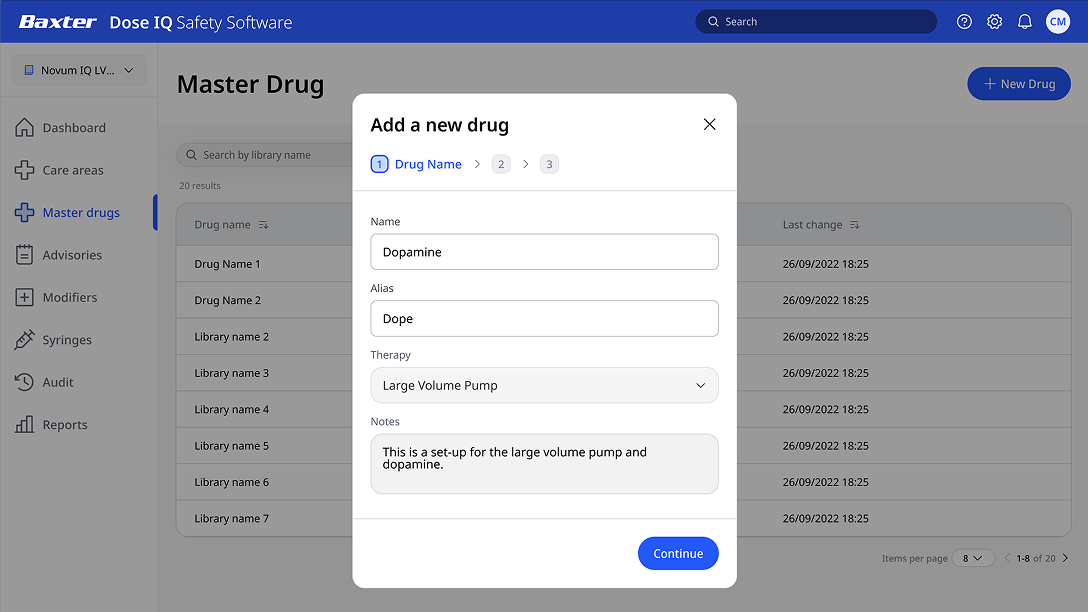
Exploring how flows behave to accommodate for different use cases with different data complexities, using modals.

Add a new drug modal

Add a new drug workflow modified to use a modal approach.

Interaction Modeling & Flow Governance

Standardizing modals, steppers, and edit-state behavior

A major part of scalability was defining how flows behave. We evaluated when a task should live in a modal versus a page, how steppers should adapt across breakpoints, and how actions should remain visible while content changes.

We also addressed edit-state clarity in settings-style pages. Dose IQ includes experiences where content appears editable immediately, which can be efficient—but it also introduces risk when users don’t clearly understand when they are “in edit mode” versus simply viewing. The design work introduced stronger cues and more predictable save/cancel patterns to prevent missteps.

Modals and workflow behaviours for a variety of use cases.

Drug Libraries & IA

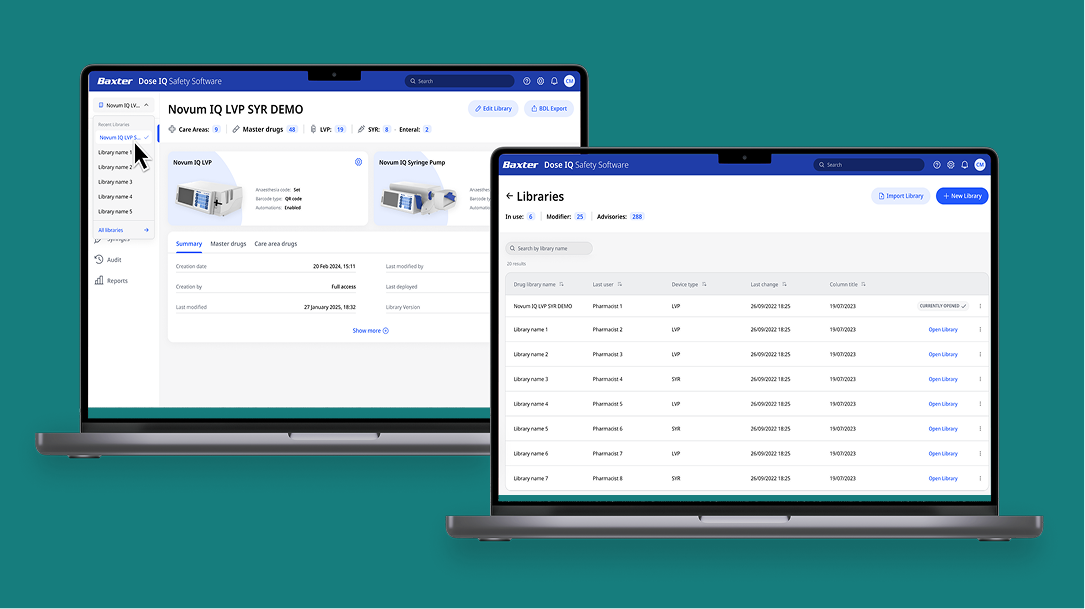
New Drug Library Experience

The new libraries page is placed on a higher, different level from the rest of the product sections. therefore it has a different Ul and UX treatment: you can access it from the opened library drop down, and get an overview of all libraries available that you can open.

Laptops showing final designs

Modals and workflow behaviours for a variety of use cases.

Outcome & Feedback

A reusable framework and a clearer path to adoption

From here, I helped to create a set of portal guidelines aligned to Baxter’s DLS that can be applied beyond Dose IQ. It also positioned Dose IQ improvements as part of a larger, cross-product system—so teams aren’t reinventing patterns or shipping inconsistent behaviors across portals.

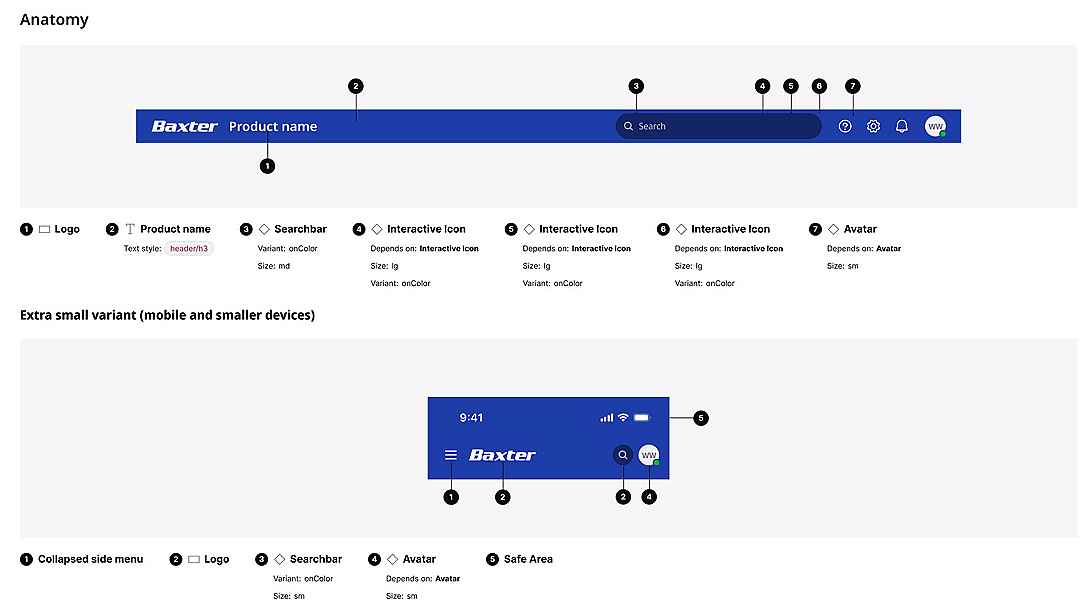
Specifications of the anatomy of header

The navigation elements shown in the guide in ZeroHeight

It created repeatable UI patterns we can carry forward into upcoming portals like Link and Device Bridge, and it set up the next operational step: onboarding development teams into the ZeroHeight design system documentation and beginning cross-functional implementation.

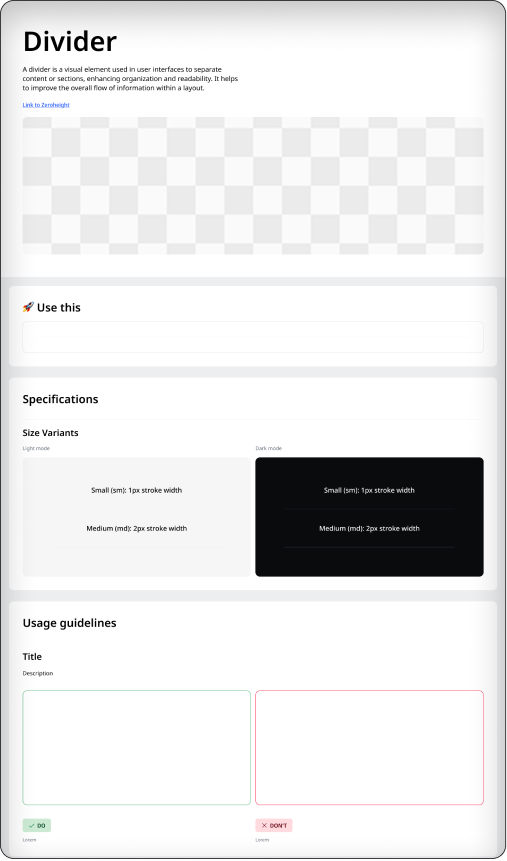
ZeroHeight documentation templates were created in Figma.

Next steps

Design System & Cross-Functional Implementation

The immediate next step is to introduce the development team to the ZeroHeight-based Design Language System, align on contribution and implementation workflows, and begin applying the portal framework across priority areas—starting with the highest-friction tasks revealed by the heuristic evaluation.